The Battle of Britain brought around maybe the most iconic aircraft of the entire war. The skies above the English channel and British airfields would, for nearly three long months, would be dominated by allied and axis aircraft fighting for control of the air. When the Germans began their attacks on British airfields, the allies had no choice but to counter the German and Italian foe by engaging in aerial combat to attempt to maintain control of allied airspace. This engagement of superpowers would bring two of maybe the most iconic aircraft of the war, into combat.
Enter the Messerschmidt BF 109-E4, with it's easily recognisable yellow nose, this incredibly fast and agile German fighter aircraft was capable of reaching top speeds of around 340mph. Armed with two 7.62mm machine guns and two 20 mm MG-FF/M that used a modified explosive round called Minengeschoß or, "mine Shell", the Me BF-109 E4 was capable of easily dispatching other aircraft it encountered.
It was not just the Germans using this new ammunition type, the British Spitfire LF MK IX used two 20mm Hispano cannos with four wing mounted .303 machine guns. Though the spitfire was agile in combat, the planes guns, all mounted on the wings, often missed their mark, going either side of the aircraft. However this did not stop the RAF from gaining the upper hand of the skies above Britain with the help of american built P51 Mustang fighter aircraft. The Luftwaffe were later in the war, to design and manufacture two of the most revolutionary aircraft of the time;
The Me 163 it's twin engined counter-part the Me 262.
Enter the Messerschmidt BF 109-E4, with it's easily recognisable yellow nose, this incredibly fast and agile German fighter aircraft was capable of reaching top speeds of around 340mph. Armed with two 7.62mm machine guns and two 20 mm MG-FF/M that used a modified explosive round called Minengeschoß or, "mine Shell", the Me BF-109 E4 was capable of easily dispatching other aircraft it encountered.
It was not just the Germans using this new ammunition type, the British Spitfire LF MK IX used two 20mm Hispano cannos with four wing mounted .303 machine guns. Though the spitfire was agile in combat, the planes guns, all mounted on the wings, often missed their mark, going either side of the aircraft. However this did not stop the RAF from gaining the upper hand of the skies above Britain with the help of american built P51 Mustang fighter aircraft. The Luftwaffe were later in the war, to design and manufacture two of the most revolutionary aircraft of the time;
The Me 163 it's twin engined counter-part the Me 262.
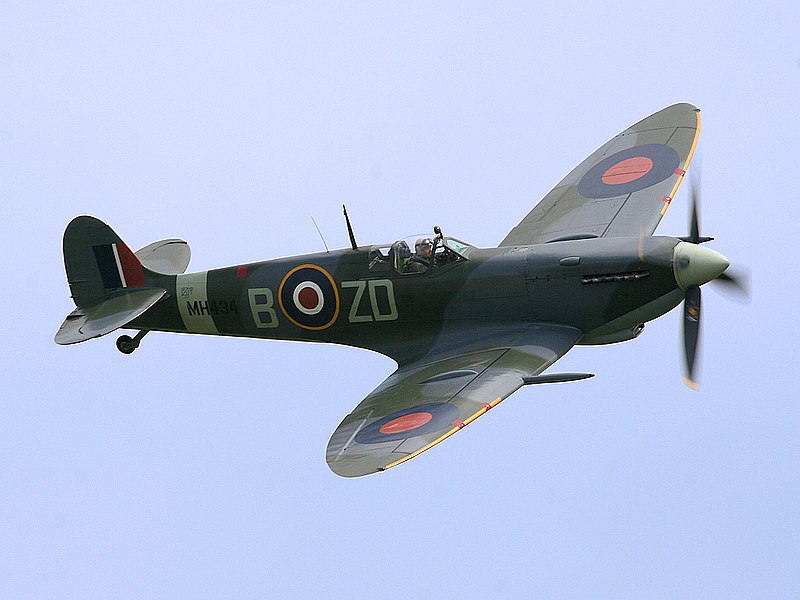 |
| Spitfire LF MK IX, armed with 4x .303 machine guns and 2x 20mm hispano cannons |
 |
| ME Bf 109 E-4, armed with 2x 20mm Minengeschoß ammunition and 2x 7.62mm machine guns |

Awesome blog man! It's really impressing!
ReplyDelete